
Case study SD / 04 · Residential
First Floor Joint Extension —
Clayhall, London
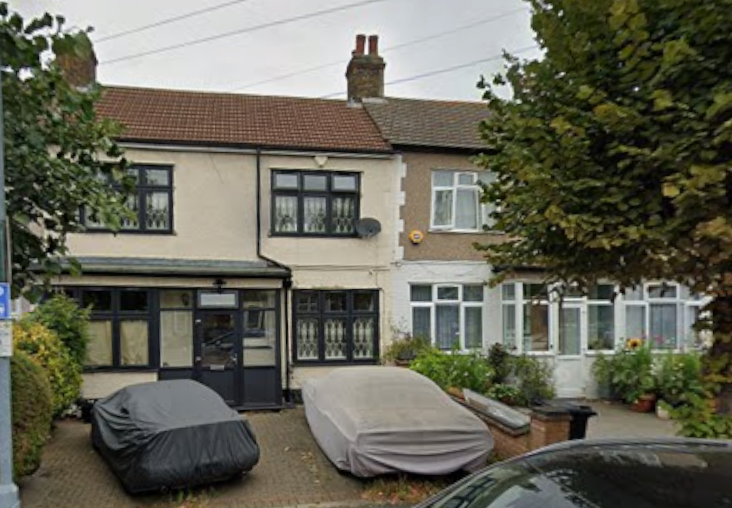
A rare design brief: two neighbouring homes deciding to extend together. A single coordinated first-floor rear extension above the existing ground-floor additions on both properties — symmetrical, neighbour-friendly, and far easier to get past planning as a pair than as two separate applications.
- Project
- SD / 04
- Location
- Clayhall, London
- Properties
- Two adjoining terraces
- Scope
- Joint first-floor rear extension
- Status
- Planning permission granted
The brief
Two homes, one
design conversation.
The owners of two adjoining houses each wanted the same thing: a meaningful upstairs extension above the rear of the home, adding bedroom and bathroom space without losing garden depth.
Rather than design two separate proposals — risking mismatched roofs, party-wall friction and competing planning applications — the neighbours agreed to commission a single, mirrored design.
The result is one cohesive piece of architecture, drawn as a pair, submitted as a pair, and built as a pair: lower cost per household, a stronger planning case, and a back elevation that looks intentional rather than improvised.
Context
A pair within a longer terrace.
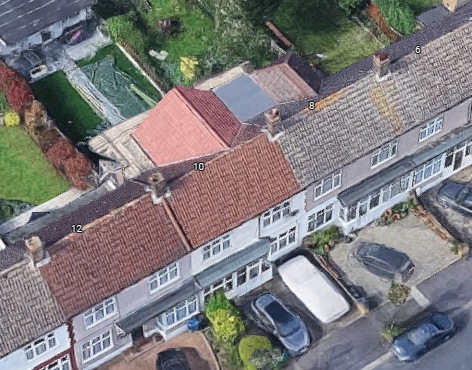
- Two adjoining homes within a continuous London terrace.
- Existing single-storey rear extensions of similar depth on both properties — the natural footprint for a first-floor addition.
- Generous rear gardens that absorb the new massing comfortably.
What stays
Ground floor and front: untouched.
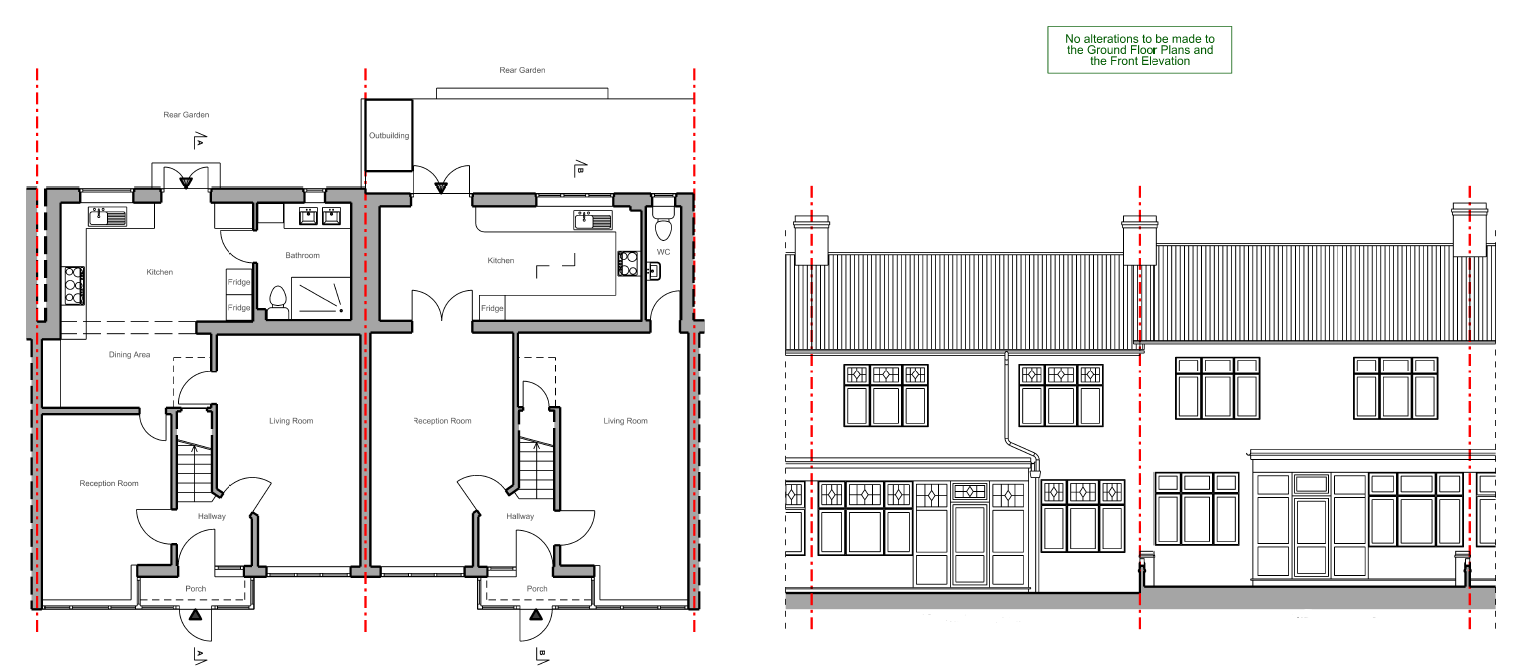
- No alterations to the existing ground floor plans.
- No alterations to the front elevation — the street keeps its rhythm.
- All new work is contained at first-floor level, at the rear, behind existing structure.
What changes
A new upstairs, drawn as a pair.
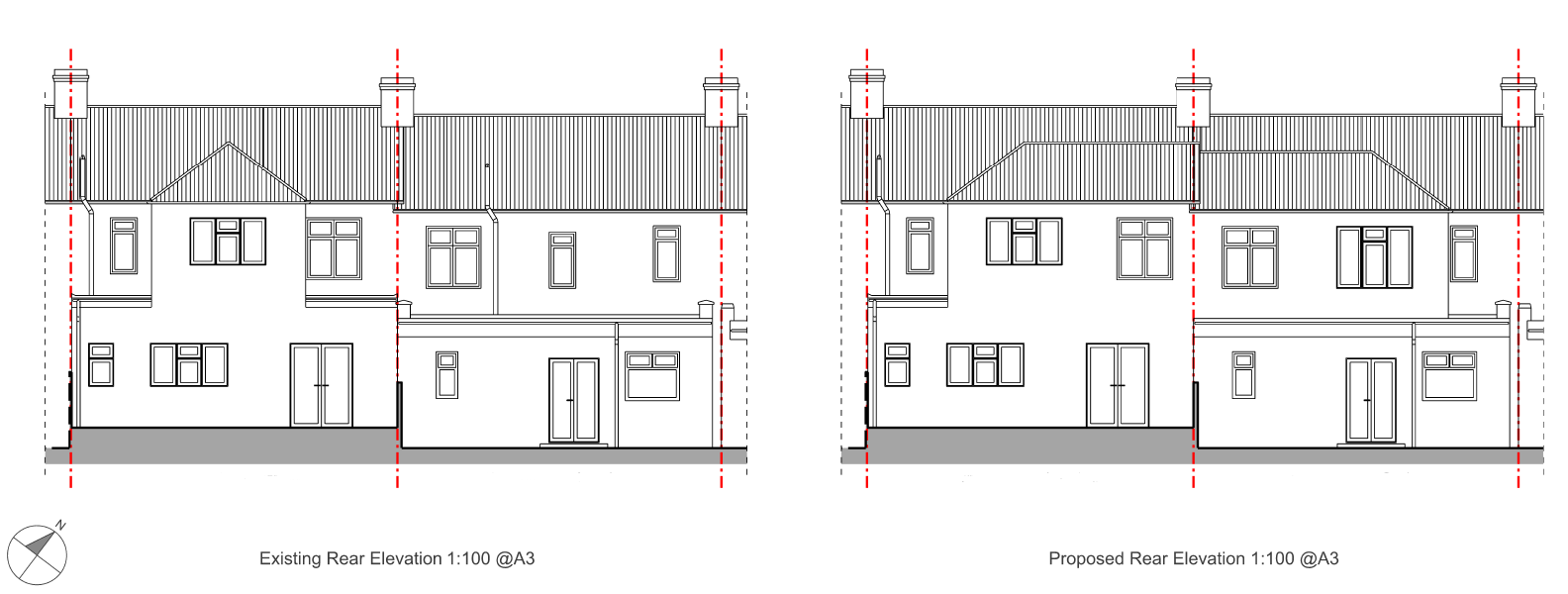
- New first-floor extension across both properties simultaneously.
- Sits squarely above the existing single-storey rear extensions — no new ground footprint.
- Mirrored fenestration and matching roof pitch read as one composition.
- Materials matched to each home's existing render and tile palette.
Planning analysis
The 45° rule,
drawn out properly.
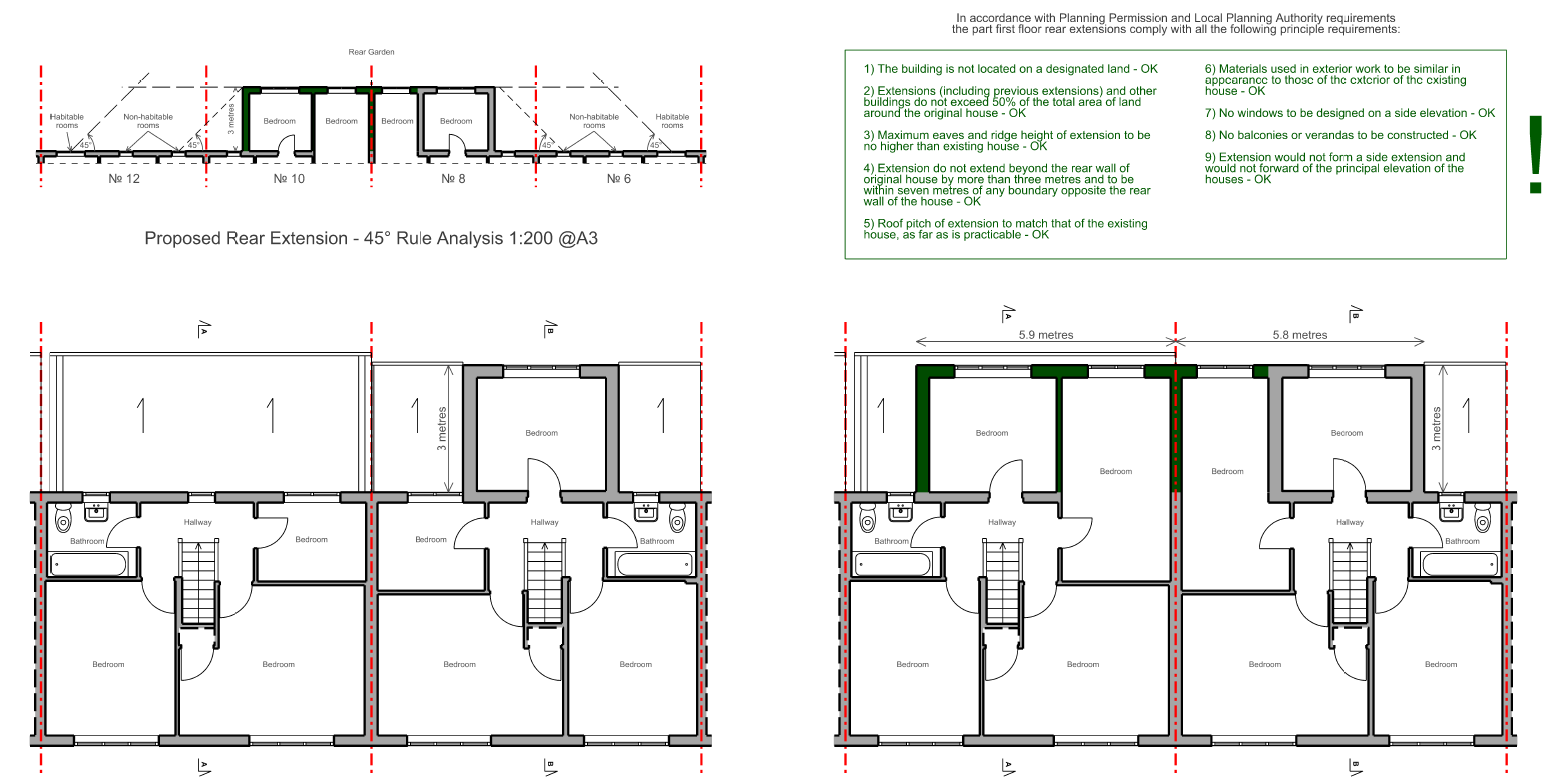
- 45° rule tested from the closest neighbouring habitable windows on both sides — proposal stays clearly below the line.
- No loss of light or outlook to adjoining properties beyond the joint pair.
- Height and depth deliberately moderated to keep the planning case straightforward.
- Result: planning permission granted.
In summary
"The best neighbour conversation is the one that ends
with both of you signing the same set of drawings."